Our second Inside the Archive takes us to Hilversum, home of the Netherlands Institute for Sound & Vision (NISV). Its collection moves across radio, television, film and press as well as born-digital forms such as online video, websites and games. But Sound & Vision is more than a place of storage: through research, artistic reuse and its Media Museum, the archive is continually brought back into public life and opened to new interpretations.
For this feature, Winke Wiegersma, Product Manager Born-Digital Heritage & Digital Culture, and Steffie van der Horst, Research Communications Specialist, share their perspective from within the ARCHAIVE project, looking at what the collection holds, how artists have worked with it, and how archival material can become a site for critical experimentation with AI.
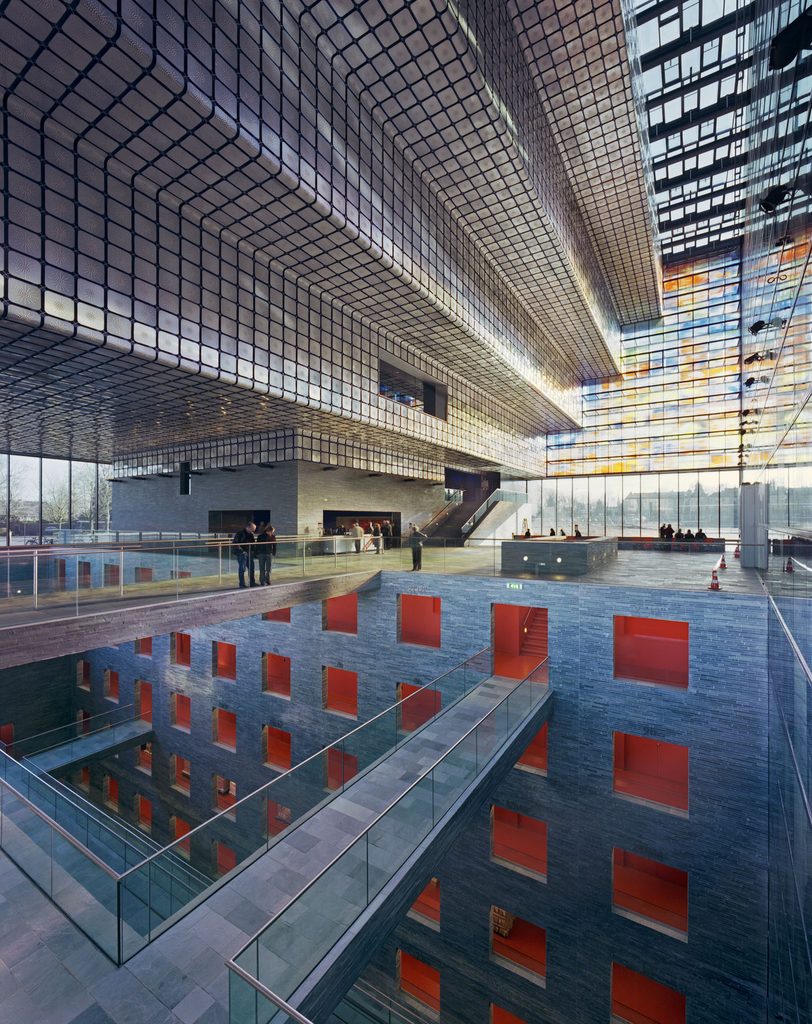
Photo: Daria Scagliola and Stijn Brakkee.
The Sound & Vision archive is located in an underground “canyon” spanning five levels of physical storage and reaching depths of up to 16 metres below ground. The building extends across seven levels in total, reaching as far underground as it rises above ground.
What lives in your archive?
At Sound & Vision, we manage one of the largest digitalized media archives in the world. Packed with — among other things — radio, television, and press, but also digital born media like YouTube videos, podcasts and games.
With our collection, we shed light on current affairs from a media-historical perspective. We show the influence of media on people’s personal life and on society, and how you can use media to get new narratives across.
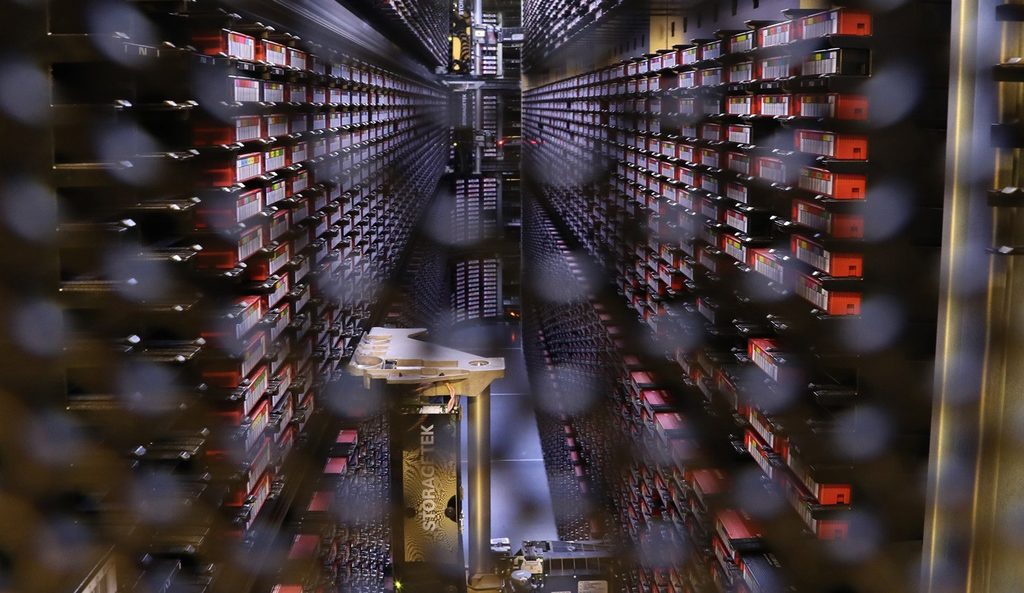
Photo: Paul Ridderhof.
Besides the depots with physical objects, Sound & Vision manages a very large digital archive. This digital storage safeguards audiovisual material for the future using current preservation technologies and makes it available for reuse by third parties.
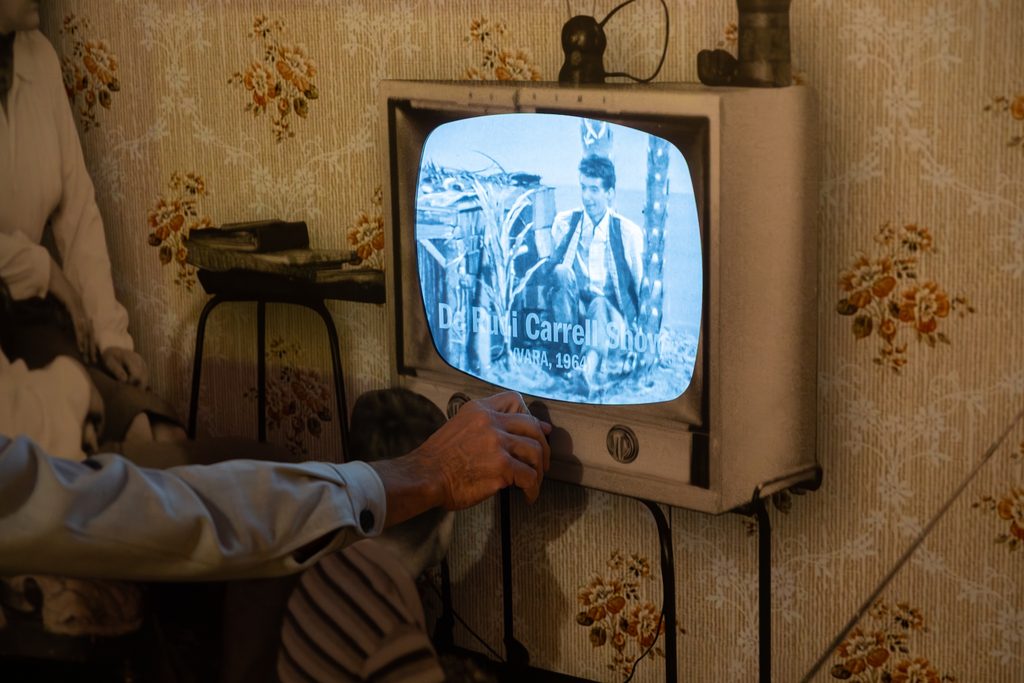
Photo: Jorrit Lousberg.
Sound & Vision also has a Media Museum, where visitors can explore 75 years of television history.
Is there an existing artwork, project or artistic practice around AI and archives that you find particularly inspiring or thought-provoking?
A couple years back, artist Pablo Núñez experimented with the potential of generative AI to interrogate historical archives, inviting viewers to discover less explored narratives resting in what can best be described as the “archive’s unconscious” in Typologies of Delusion.
Using several tools trained on Dutch Polygoon Journaal footage from Sound & Vision’s collection, two visual typologies generated portraits and cinematic film stills. The project deliberately preserved AI imperfections to expose biases and training limitations. It also investigated AI as a creative tool for visual history and storytelling.
The project was presented at Sound & Vision’s RemixFest in 2023 and used material from its Polygoon Journaal collection.
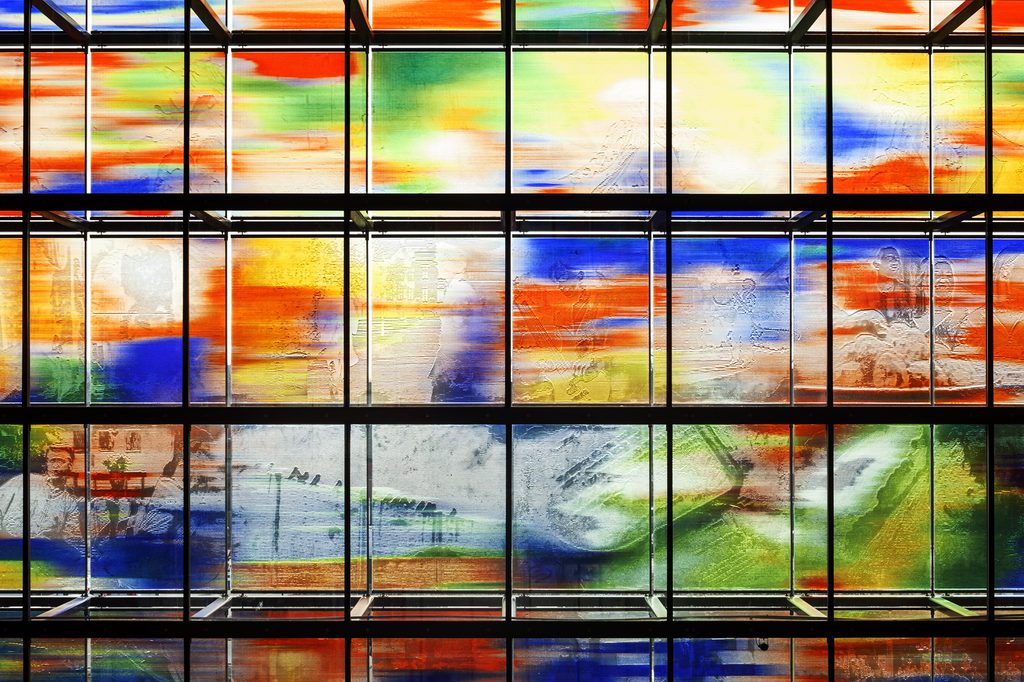
Photo: Daria Scagliola and Stijn Brakkee.
The colourful glass façade of the Sound & Vision building in Hilversum incorporates 768 abstracted television stills and recognisable Dutch television images from the archive.
Which of your past or upcoming projects connect to ARCHAIVE?
Several of our projects connect directly to ARCHAIVE’s themes.
With the Common European Data Space for Cultural Heritage, The Case for Public AI explores how cultural heritage can help shape AI for the public good — connecting to ARCHAIVE’s focus on critical AI.
Through artist residencies in projects such as Open Archief and Sounds Familiar, artists creatively reuse, critically engage with and reinterpret our archive. Open Archief focuses on creative reuse of digital heritage collections, while Sounds Familiar works with artists and communities to question dominant archival narratives and make audiovisual heritage more inclusive and multivocal.
Finally, Archival Images of AI explores how digital heritage collections can be remixed to create new ways of representing AI.
What interests you about participating in ARCHAIVE?
What excites us about ARCHAIVE is the opportunity to explore how media archives can inspire new stories, creative ideas and ways of looking at the world. At Sound & Vision, we already have lots of experience with creative reuse of archive material and we’re curious to see what new possibilities emerge when archival reuse meets critical thinking around AI. We look forward to experimenting together and bringing archives to life in unexpected ways.