Our final Inside the Archive brings us to Berlin and Public Art Lab, an action research platform that has been working with urban media art, public space and creative technologies for more than two decades.
For PAL, an archive is not necessarily a collection contained in one place. Its memory is distributed across cities, media façades, public screens, artistic collaborations, project documentation and the encounters that happened around them. From the early Media Facades Festivals to the Connecting Cities Network and today’s City Digital Skin Art programme, these projects form a continuously evolving record of how media art can enter public space and connect people across places.
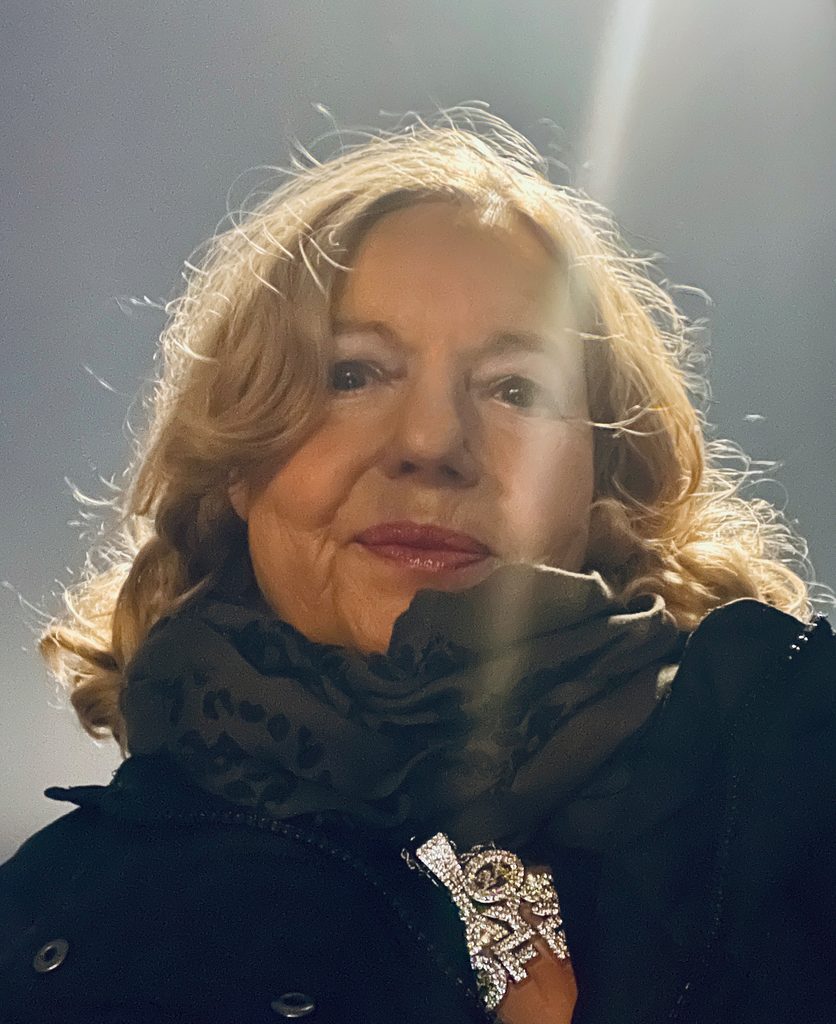
For Inside the Archive, Susa Pop, artistic director and co-founder of Public Art Lab, revisits this history through Marshall McLuhan’s idea of “looking into the future through the rear-view mirror”: returning to earlier experiments not simply to preserve them, but to ask what they can tell us about the technological, ecological and social questions emerging today.
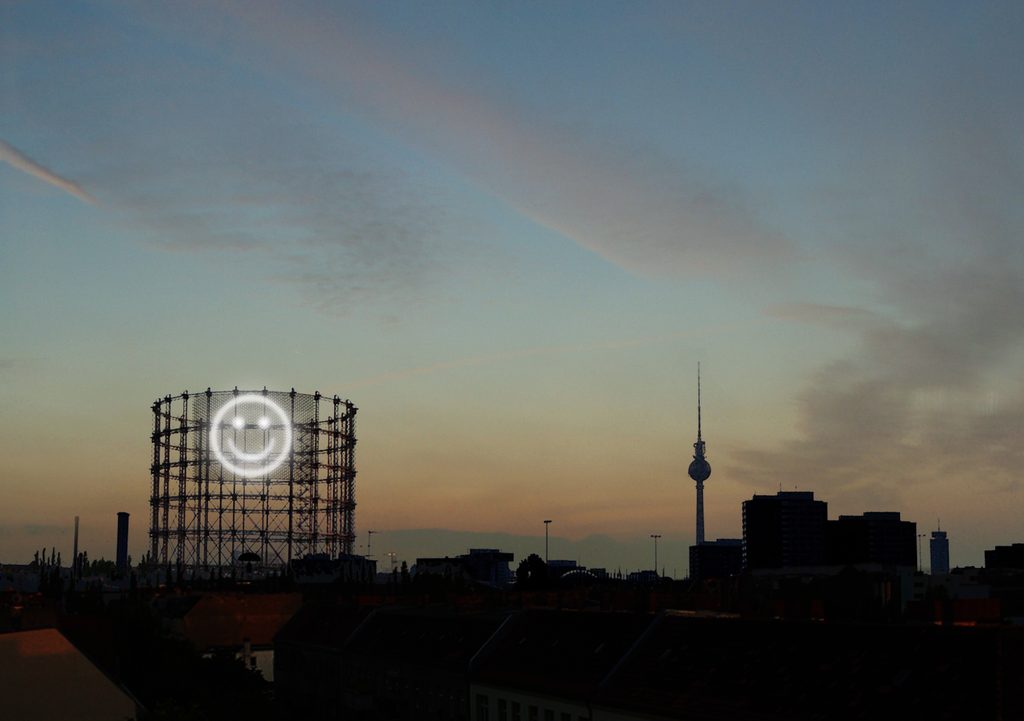
Public Face by Julius von Bismarck, Richard Wilhelmer and Benjamin Maus, presented during the Media Facades Festival Berlin 2008.
What lives in your archive?
The Connecting Cities platform reimagines the city as a living archive.
Unlike traditional archives that primarily preserve artworks and documents, it holds the collective memory of around 120 urban media art projects exploring translocal dialogue, creative citymaking and data visualisation.
These projects were curated and produced through initiatives spanning nearly two decades: the Media Facades Festivals in Berlin (2008) and across Europe (2010), Connecting Cities (2012–2016), the Urban Media Art Academy (2016–2019), alongside experiences from the newly co-curated City Digital Skin Art programme.
Together, they trace an evolving practice of using urban digital infrastructures not simply as screens, but as public interfaces for artistic experimentation, participation and exchange.
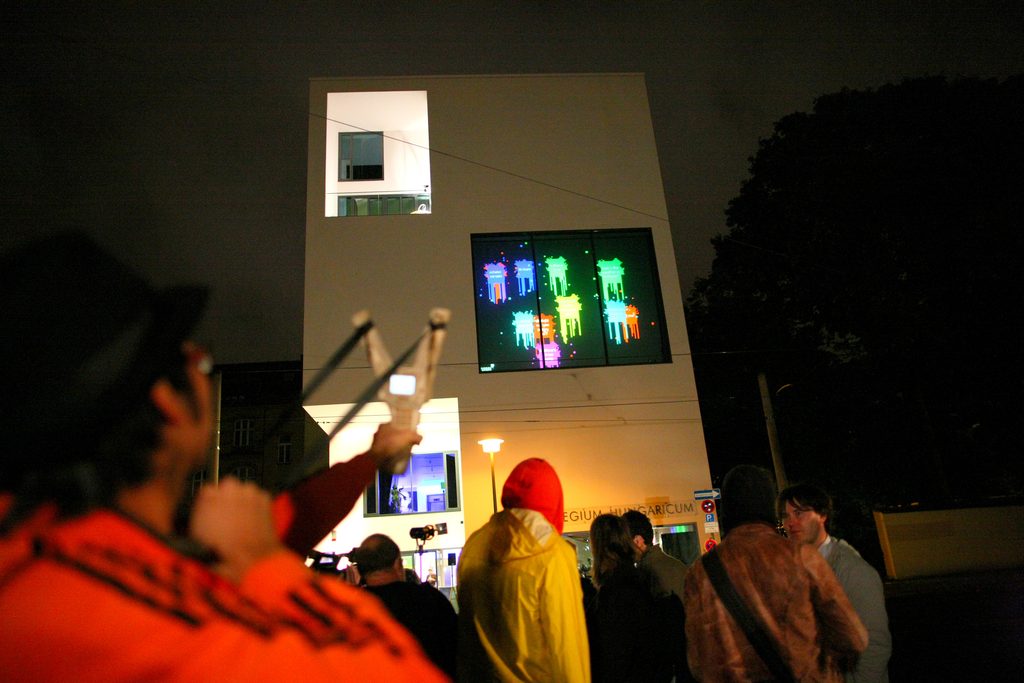
SMSlingshot (2010) by VR/Urban turns media façades into platforms for public expression. Using a digitally equipped wooden slingshot, citizens can send text messages onto urban screens as colourful splashes. During Connecting Cities events in 2013, two SMSlingshots connected participants in Berlin and Liverpool in a translocal dialogue.
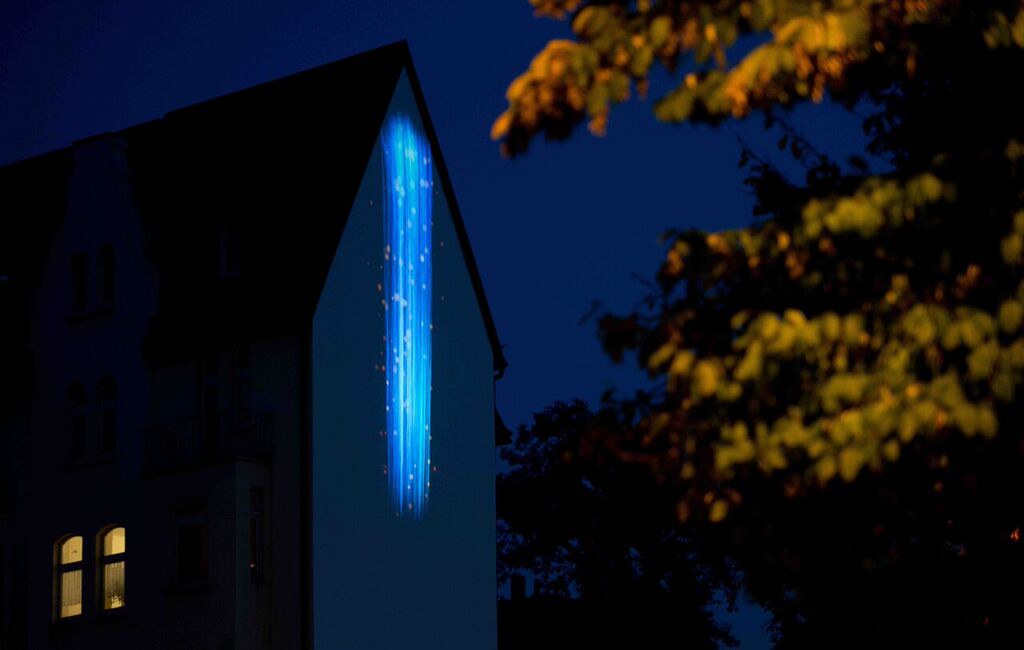
Andrea Polli’s Particle Falls (2010) is an early example of real-time environmental data visualisation in public art. Air-quality sensors translate particulate pollution into a projected waterfall, making an otherwise invisible environmental condition perceptible in public space.
Is there an existing artwork, project or artistic practice around AI and archives that you find particularly inspiring or thought-provoking?
We are also interested in practices that approach nature itself as a living planetary archive.
Seeing Echoes in the Mind of the Whale by Marshmallow Laser Feast uses underwater footage, whale vocalisations, bioacoustic research and computational processes to explore how cetaceans perceive their underwater environment through sound.
The work brings together scientific datasets and artistic interpretation to extend human perception into sensory worlds that normally remain inaccessible to us. From an ARCHAIVE perspective, it is particularly interesting because it suggests that an archive can also exist in ecological systems, sounds, behaviours and forms of more-than-human memory.
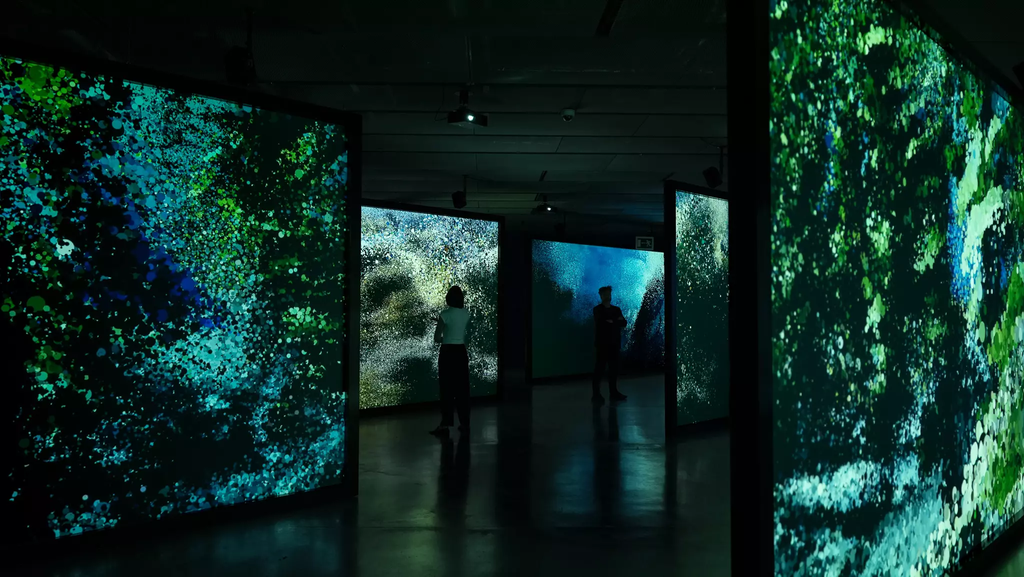
Seeing Echoes in the Mind of the Whale, 12-channel edition, Fundación Telefónica, Madrid.
Which of your past or upcoming projects connect to ARCHAIVE?
City Digital Skin Art (CDSA) builds on Public Art Lab’s long-standing practice of bringing media art into public space.
Now in its fifth edition, the international programme invites students and emerging artists to develop short video artworks for large-scale urban screens and media façades around the world.
The 2026 programme, Liquid Commons, focuses on oceans and deep-sea ecologies as shared planetary environments, asking how artistic practice can translate scientific knowledge, ecological processes, data and beyond-human perspectives into experiences within everyday urban life.
Many of these works experiment with AI-supported creative processes, animation, data visualisation and speculative approaches. Presented across cities and public infrastructures, CDSA continues a question that has accompanied PAL since its early urban media projects: how can screens designed for commercial communication become shared cultural spaces for artistic exchange?
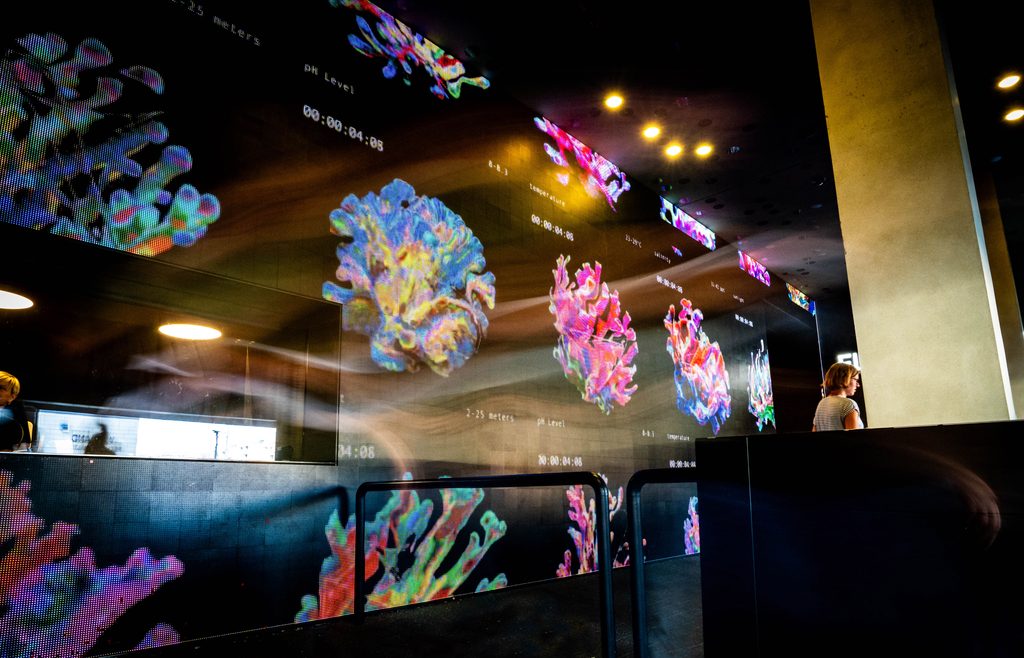
CDSA 2024, “Beyond the Screens”, Hamburg Elbphilharmonie — Echo of Bits by Mina Boylu & Idil Öztürk.
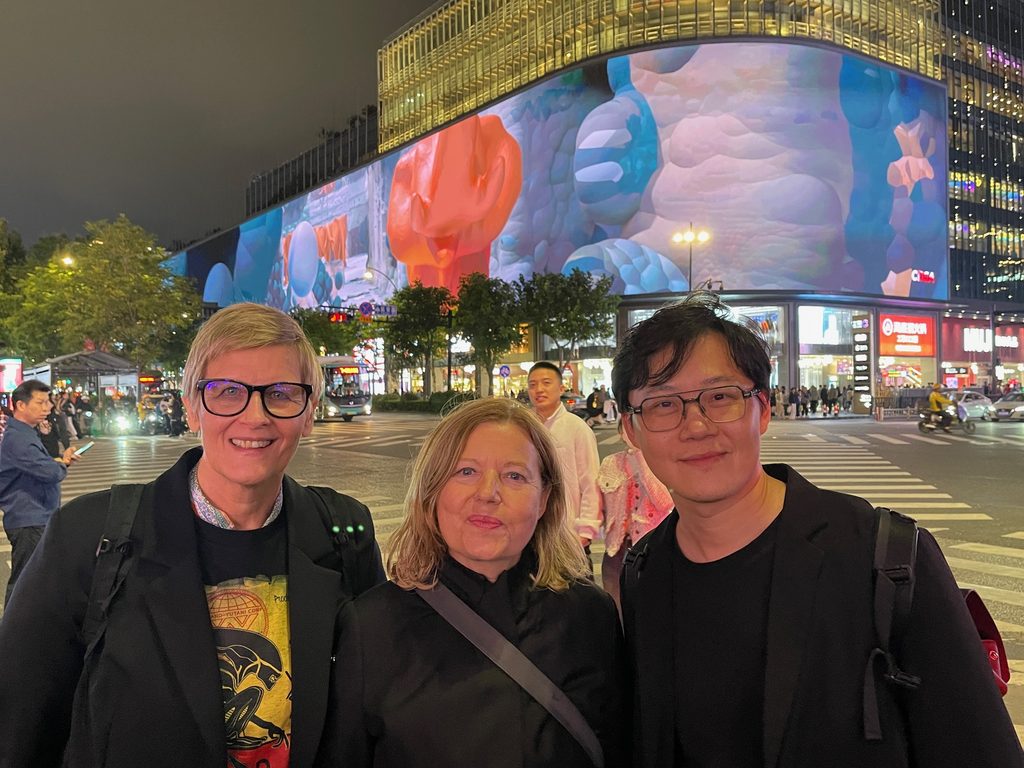
CDSA screening in Hangzhou city centre with Ina Conradi, Susa Pop and Yuelai Ruan.